
What Is Deep Flow Guttering?
Explore the essentials of deep flow guttering, including its design, advantages, and how it can enhance your building’s drainage system. Get in touch today for your guttering and drainage needs.
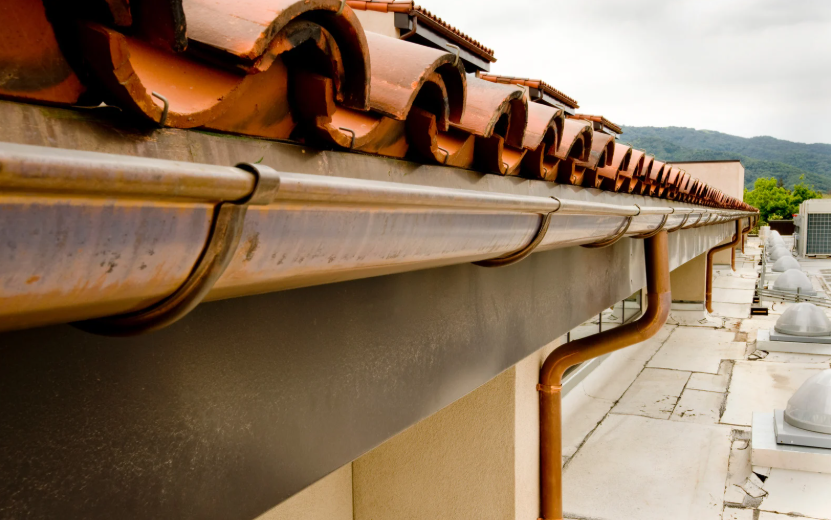
Your guttering plays a major role in keeping the water flow rate smooth, protecting your building from preventable water damage. However, having the right guttering goes far beyond just the material and style. In fact, choosing the right guttering system starts with knowing how to measure guttering properly.
It is vital to measure your guttering system accurately, no matter if you are working on residential properties, modern homes, or commercial buildings. Making even the slightest of misjudgements in size can impact the effectiveness of your entire guttering system.
At Rainguard, we want to help you understand what it takes to measure gutter size, understand the capacity of guttering, and the most suitable materials that can make the entire system most effective.
Click here, call 0113 279 5854 or email info@rainguard.co.uk to contact us at Rainguard for help with everything related to guttering systems!
Well, if the gutter size is incorrect, then your roofing will not be able to handle heavy rain, which could lead to massive issues that will cost quite a few pennies to repair.
If the gutter is too small, it can:
The right gutter size ensures efficient rainwater systems and long-term protection. Having said that, it is still very important to regularly check your guttering to guarantee it is working to its full capacity. The last thing you need is for the system to be impacted due to negligence.
The last thing you need when trying to put something together is looking for the tool you should have already had within arm’s reach.
So to avoid such situations, ensure you have the following close by:
Accurate tools help you collect reliable data for your project. And, for this project, accurate data is not just a hope but a necessity.
Accurate measurements of guttering are vital, as being even slightly off could impact the effectiveness of the entire system once installed. So, even though it may sound simple, it is still something that needs your full attention.
Here’s a step-by-step guide to measuring guttering:
First, measure the full length of each gutter that runs along the roof edge. When doing this, please ensure to take note of each straight section and the number of corners, etc.
If you have a gutter system in place currently, then make sure to check the width and depth of it, and whether it is a half-round gutter or a square system. This is so that we can match it, as it’s likely the best option. If it is a new system, then you can check the space or ask neighbours about their system as a guide.
Record the downpipe size, including the diameter of the pipe and its position on the wall. This will enable safety and security once the guttering is placed.
This section of measuring is going to take an educated estimate, but it’s mostly what we’ve got. You can estimate the effective roof area by measuring the roof dimensions. By doing this, it helps us to determine gutter capacity and required flow. This will all be very important in the long run, so that we don’t have water flow and blockage issues occurring every time there’s a slightly heavier downpour.
A steeper roof pitch increases water flow, which may require larger gutters or additional downpipe capacity. So, take that into consideration before deciding what the correct gutter size should be. IF unsure, get expert help.
We know that this will sound obvious, but it needs to be said: the correct gutter size for you will vary from others, depending on the building type. This is vital for homeowners or building landlords to take into account. For example:
Some of the most common options at Rainguard include:
With many options available, you will find something for your premises. However, we strongly suggest that you check British Standards for guidance before selecting the type of gutter once the measurements have been taken.
Your guttering system should match your building style and performance needs. At Rainguard, we prefer GRP and aluminium guttering as they are a popular choice for our team.
Both are great as they are lightweight and easy to install, plus, they are versatile, meaning that they can be a great option no matter the building.
Aluminium, in particular, is a great option due to its longevity.
Finally, please make sure to do all of your final checks before you begin installing your guttering system. The things you need to pay attention to are:
The Final checks are designed to spot anything you may have missed, but the truth is that if you have followed the step-by-step guide diligently, the chances are you were well prepared to install the guttering.
So, learning how to measure guttering properly is key to choosing the right system. By taking exact measurements, noting down the number of corners, and selecting the most suitable materials (with the help of specialists), you can ensure that your guttering is perfect for your building.
Click here, call 0113 279 5854, or email us at info@rainguard.co.uk for help from one of the most reputable companies in the UK when it comes to guttering.
Explore the essentials of deep flow guttering, including its design, advantages, and how it can enhance your building’s drainage system. Get in touch today for your guttering and drainage needs.
Look up at your roof line, and you will see more than just tiles. Fascias, soffits and guttering all play a key role in protecting
Your guttering plays a major role in keeping the water flow rate smooth, protecting your building from preventable water damage. However, having the right guttering